Gold And Silver Slide In Front Of This Week’s FOMC Rate Decision
Reports of Russian Central bank selling combined with renewed tensions in the Middle East pressured the precious metals complex lower for most of last week.
Several technical indicators including the daily Relative Strength Index (RSI) have now reached oversold territory for the first time since mid-July.
The key driver for price activity this week will be the interest rate decision from the US Federal Open market Committee (FOMC) on Wednesday.
The US Central Bank is expected to hold their FED Funds rate target unchanged at 3.75% to 4.00%, which should be bullish for Gold, Silver and Platinum prices.
Physical Gold priced in USD dropped to a three-month low at $3975.00 last Friday and finished the week 4.1% lower at $3995. The daily RSI is showing oversold at 33.00.
The last time the daily RSI was oversold was on July 17th at $3959.00. Four weeks later, USD Gold was 18.6% higher at $4695.00.
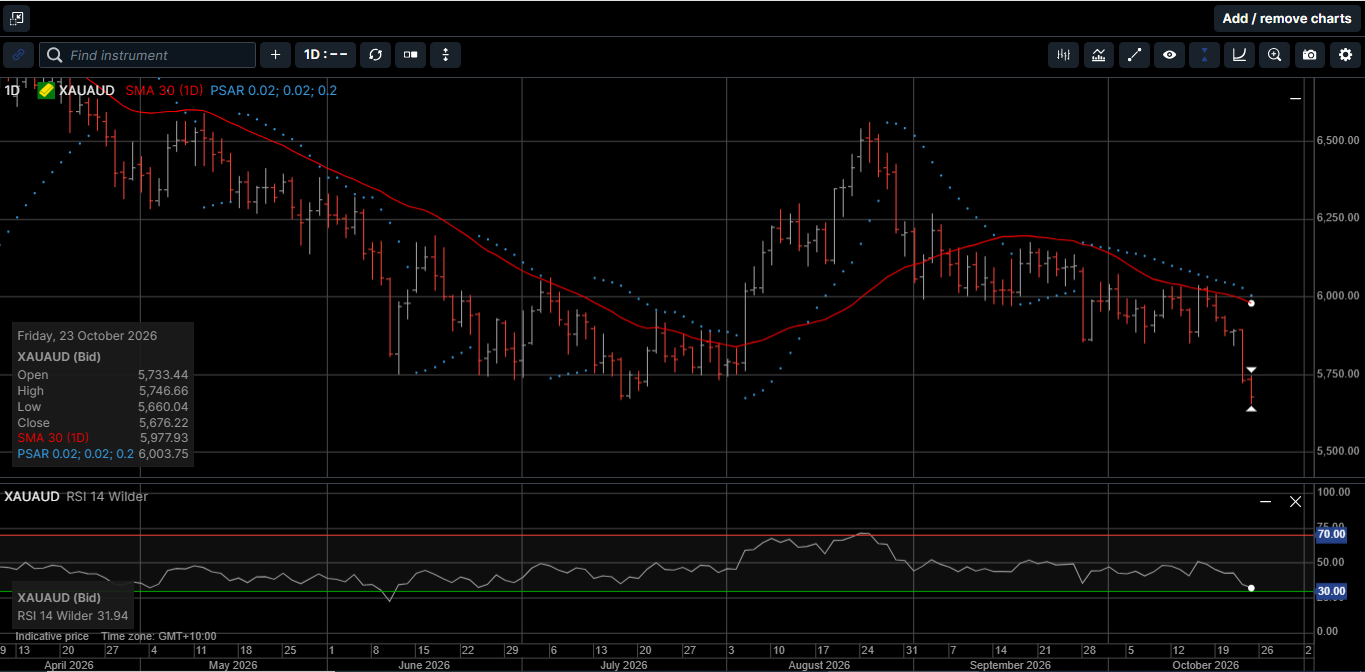
Gold denominated in AUD hit a 13-month low at $5660.00 and closed the week 5.3% lower at $5676.00. The daily RSI is 32.00, which is an oversold reading.
Like USD Gold, AUD Gold rallied by 16.2% during the four weeks after posting the oversold low on July 17th.
Physical Silver priced in USD dropped to an 11-month low at $53.10 on the way to a 5.4% weekly loss and a $53.88 close. The daily RSI is at an oversold level of 31.50.
The last time USD Silver was this deeply oversold was on July 17th. Four weeks later the price was 31.4% higher at $69.80.
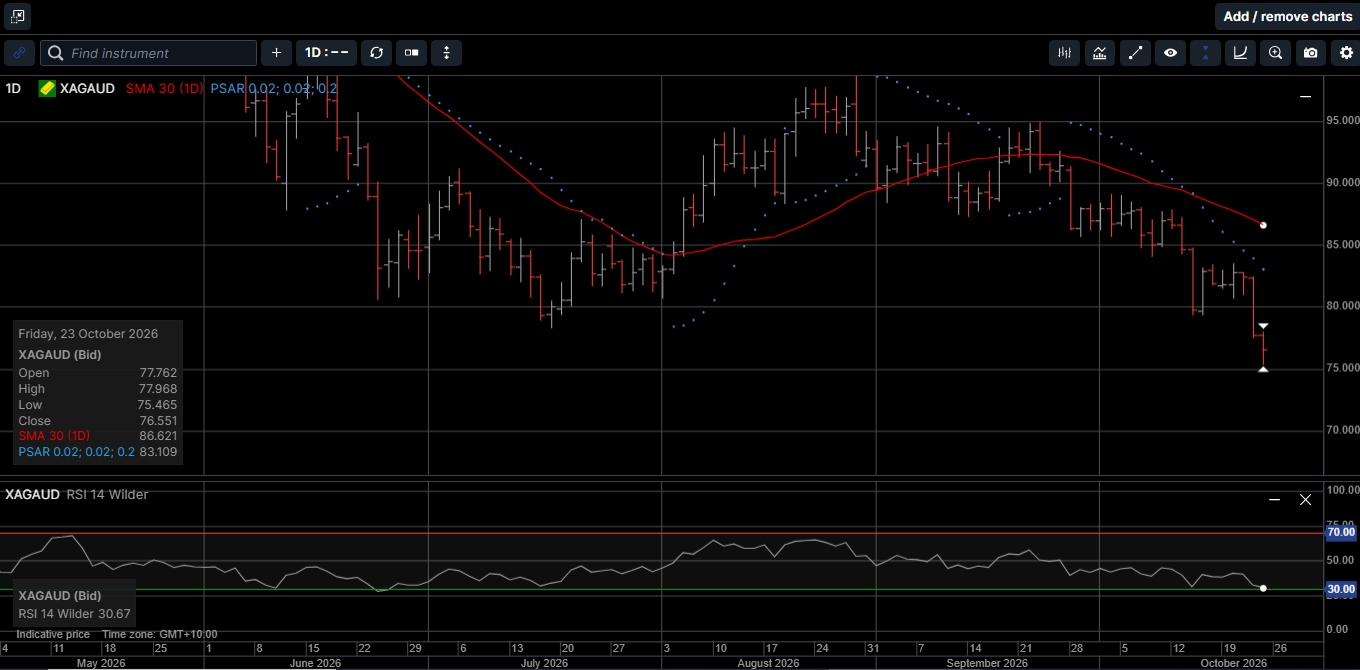
Silver denominated in AUD hit an 11-month low at $75.45 before rebounding to close 6.6% lower at $76.55. The daily RSI is 30.50 and pointing lower.
During the four weeks after the last oversold reading on July 17th, AUD Silver prices climbed 26.2% higher to $98.75.
The Gold versus Silver Ratio rose 1.7% in favor of Gold to close at 74.00, which means it takes 74.00 ounces of Silver to equal the price of one ounce of Gold.
The ratio hit a 10-month high of 75.20 last Friday, which suggests some mean reversion lower over the near term.
Physical Platinum slipped to a three-month low at $1540.00 and closed out the week 5.1% lower at $1550.00.
The daily RSI is showing oversold at 32.50. Like the other metals in the group, Platinum rallied 16.7% to $1910.00 after the July 17th oversold reading.
As investors look ahead to this week’s monetary policy decision, market positioning remains divided between sticky inflation pressure, weaker economic activity, and growing financial market instability.
The FED Funds forward market favors no change at this week’s meeting, with recent pricing indicating approximately a 90% probability of a pause and a 10% probability of a 25-basis-point increase.
December tightening remains the central market expectation, although the precise probabilities have fluctuated as traders recalibrate growth risks and the inflationary impact of elevated energy prices.
US Treasury yields continued to decline from recent 20-year highs as risks in both the commercial and residential real estate markets are escalating.
The benchmark US 10-yr bond yield has dropped from 5.35% to 4.95% over the last two weeks as the commercial real estate (CRE) market is showing clear signs of stress.
Commercial real estate has gotten double-broadsided, first by the effects of the pandemic, including working-from-home; then by the higher interest rates.
These problems stem from years of super-low interest rates that caused valuations to balloon and that allowed landlords to cashout-refinance their properties with massive new loans at low rates and supported by Loan-to-Value ratios based on inflated valuations.
A big portion of those pre-pandemic or pandemic-era loans were floating-rate loans that quickly became economically impossible when short-term rates began to soar in mid-2022.
And fixed-rate loans can no longer be refinanced when they mature because a property that made economic sense with a 3% loan does not make economic sense with a 7% loan.
These troubled loans have been bouncing through the financial system and investor portfolios since the pandemic in 2019 and 2020.
There have been a growing number of defaults, foreclosures, loan modifications, write-downs, write-offs, loan-loss reserves, and ultimately sales of loans or properties at massive losses over the last three years.
Does CRE stress matter to the FED, and can it influence monetary policy?
Absolutely.
All combined, there are $6.3 trillion in commercial real estate loans outstanding as of the second quarter of 2026.
As illustrated on Chart 1, the delinquency rate of Commercial Mortgage-Backed Securities (CMBS) has been gigantic, and worse than at the peak of the Financial Crisis.
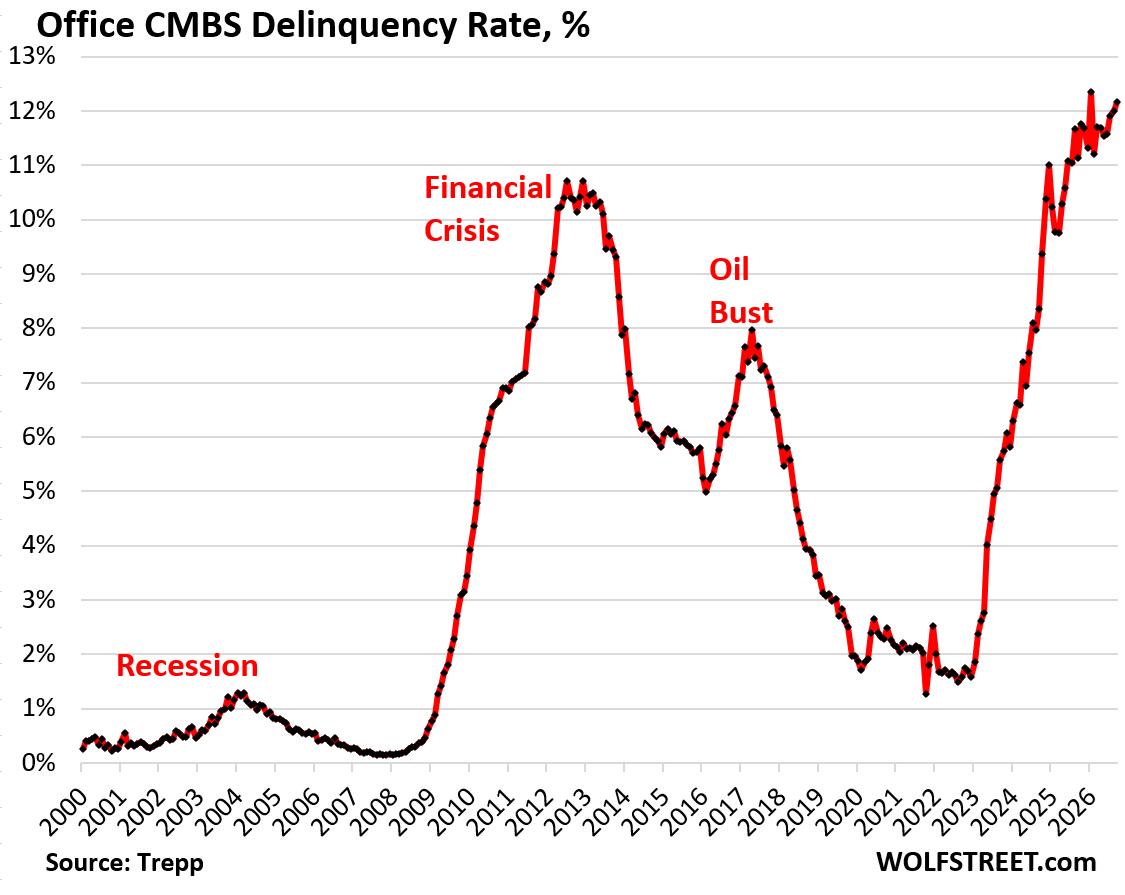
Every time the FED raises rates, the outstanding losses and refinancing stress get more severe.
In addition, as shown on Chart 2, based on the revised estimates from the US Office of Management and Budget, interest on the national debt will surpass Social Security as the largest capital outlay by 2028.
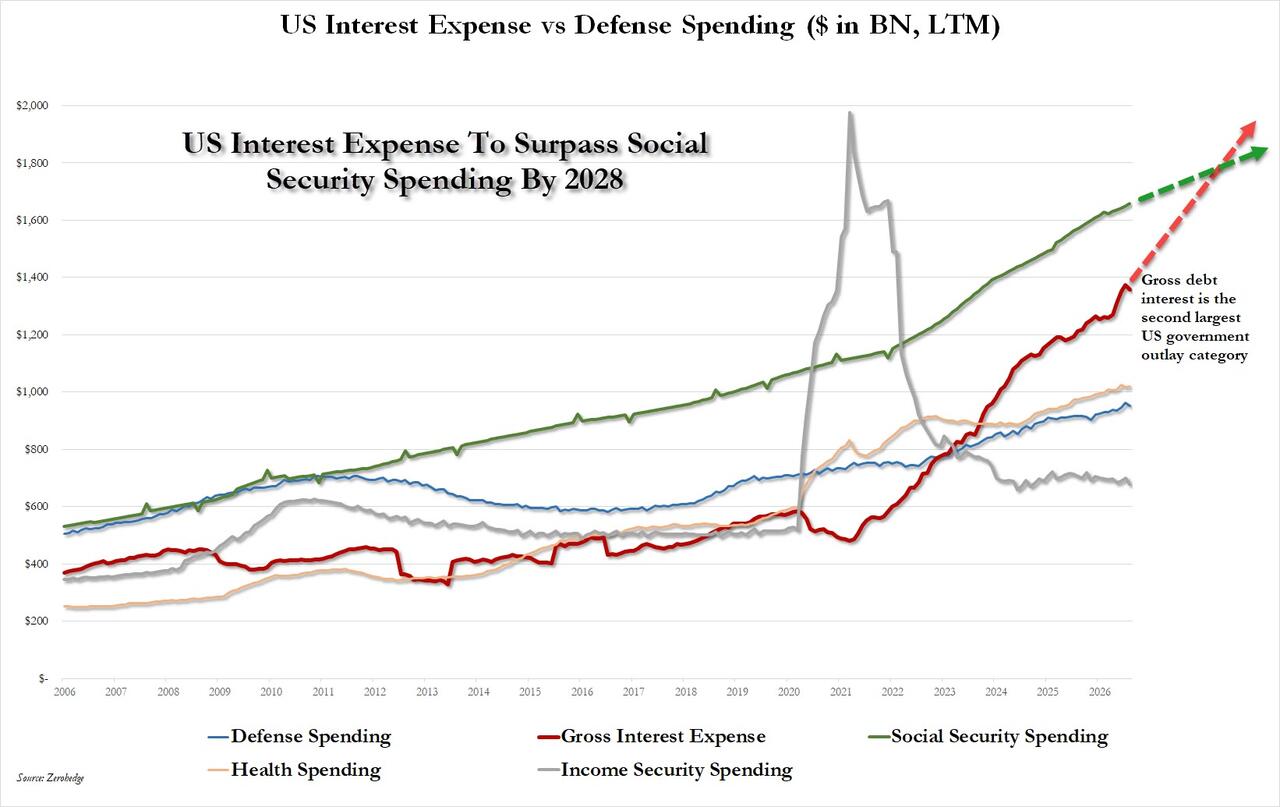
These are just a couple of the themes that we believe have the potential to steer the FED’s monetary policy away from the idea of a protracted interest rate tightening cycle into next year.
Further, as shown on Chart 3, for the last five years, Central banks and Reserve Managers have been steady buyers of Physical hard assets regardless of the price.
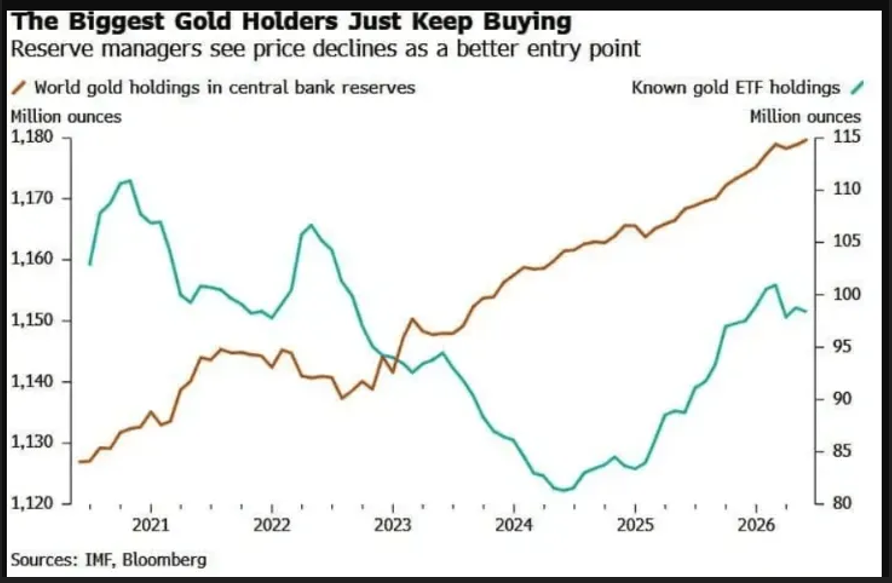
The logic is simple; throughout history hard assets have maintained their value during periods of economic uncertainty, geopolitical instability, and fiscal insolvency.
Central Banks and long-term investors understand that hard assets have a time proven track record of preserving and growing wealth during turbulent times.
As such, the recent pullback in prices is a call to action for long-term investors to add to their holdings of physical Gold, Silver and Platinum before the next leg higher.
This publication has been prepared for the GBA Group Companies. It is for education purposes only and should not be considered either general of personal advice. It does not consider any particular person’s investment objectives, financial situation, or needs. Accordingly, no recommendation (expressed or implied) or other information contained in this report should be acted upon without the appropriateness of that information having regard to those factors. You should assess whether or not the information contained herein is appropriate to your individual financial circumstances and goals before making an investment decision or seek the help the of a licensed financial adviser. Performance is historical; performance may vary; past performance is not necessarily indicative of future performance. Any prices, quotes or statistics included have been obtained from sources deemed to be reliable, but we do not guarantee their accuracy or completeness.